

Building habitats for tomorrow’s interstellar journeys represents one of humanity’s most ambitious engineering challenges. As space agencies and private companies plan missions to Mars and beyond, the focus has shifted from merely reaching distant worlds to creating sustainable living environments that can support human life for years or even decades. These spacecraft and orbital stations must withstand extreme temperature fluctuations, radiation exposure, and the vacuum of space while maintaining breathable atmospheres and protecting delicate life support systems.
The critical role of sealing technologies in space habitats
Every pressurized module in a spacecraft requires thousands of seals to maintain atmospheric integrity. A single leak in deep space could prove catastrophic, making the reliability of sealing materials absolutely essential. Engineers working on the International Space Station discovered that traditional rubber seals degraded rapidly under constant radiation exposure and temperature swings ranging from minus 150 to plus 120 degrees Celsius. This revelation forced a complete reassessment of sealing technologies for long-duration missions. Modern space habitat designs now incorporate advanced materials that can maintain their structural integrity across these extreme conditions. Gasket sheets made from specialized compounds have become fundamental components in hatch assemblies, life support connections, and thermal management systems. These materials must resist atomic oxygen erosion in low Earth orbit while maintaining flexibility in the cold vacuum of space. Testing protocols for space-rated sealing materials now extend beyond 100,000 pressure cycles to simulate decades of continuous operation.
Engineering solutions for extreme environments
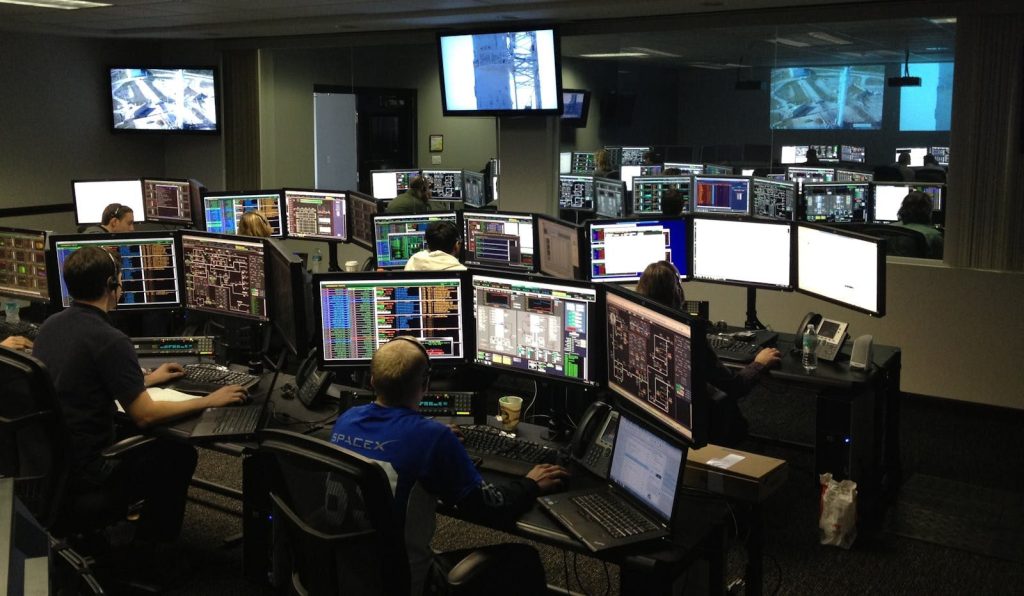
The temperature differential between a spacecraft’s sun-facing and shadow-facing surfaces can exceed 200 degrees Celsius within minutes during orbital maneuvers. This thermal stress creates unprecedented challenges for maintaining sealed connections in fuel lines, coolant systems, and habitation modules. NASA’s Artemis program has invested heavily in developing hybrid sealing solutions that combine metallic cores with high-temperature resistant outer layers. Kammprofile gaskets have emerged as particularly valuable in these applications due to their ability to maintain seal integrity despite rapid thermal cycling. The serrated metallic core provides structural stability while the soft facing material adapts to surface irregularities and thermal expansion. Engineers at SpaceX have integrated similar technologies into the Starship design, recognizing that interplanetary vessels require sealing solutions far more robust than those used in current orbital platforms. The company’s testing facility in Texas subjects prototype seals to simulated Mars atmospheric conditions, where carbon dioxide dominance and extreme cold present unique challenges.
Material science innovations driving habitat development
Graphite-based sealing materials have proven exceptionally resistant to radiation damage and chemical degradation in space environments. Unlike polymer-based alternatives that can outgas volatile compounds in vacuum conditions, graphite maintains its structural properties without contaminating sensitive scientific instruments or air recycling systems. A graphite gasket sheet can function reliably at temperatures approaching 500 degrees Celsius, making it indispensable for thermal protection systems and engine compartment seals. Recent advances in flexible graphite manufacturing have produced materials that weigh significantly less than traditional metallic seals while offering superior conformability to mating surfaces. The European Space Agency’s research into expandable habitat modules relies extensively on these lightweight sealing solutions to minimize launch mass while maximizing interior volume. Each kilogram saved in structural components translates to additional capacity for scientific equipment, provisions, or fuel reserves.
Addressing the challenge of long-term reliability
How do we ensure that sealing systems will perform flawlessly during a three-year journey to Mars and back? This question drives intensive research into predictive failure analysis and redundant sealing architectures. Engineers now design critical pressure vessels with multiple independent sealing barriers, each capable of maintaining atmospheric containment if others fail. Sensor networks monitor seal compression, temperature, and micro-leak rates in real-time, providing early warning of potential failures. The Mars 2020 Perseverance rover incorporated over 3,000 individual seals throughout its mechanical systems, each selected and tested for the specific environmental conditions it would encounter. Building habitats for tomorrow’s interstellar journeys demands this same meticulous attention to sealing integrity, multiplied across structures hundreds of times larger. Maintenance protocols for long-duration missions must account for the fact that replacement parts cannot be ordered from Earth. Habitat designs therefore incorporate accessible seal locations and standardized components that crew members can replace during routine maintenance cycles.
Integration of kammprofile gaskets in life support systems
Water recycling systems aboard spacecraft process every drop of moisture, from condensation to wastewater, making seal reliability in these systems absolutely critical. Contamination or loss of processed water during a multi-year mission could endanger the entire crew. The filtration assemblies, pressure vessels, and distribution networks require sealing solutions that resist both chemical attack and biological fouling. Kammprofile gaskets provide exceptional performance in these applications, with their metallic cores resisting corrosion from treatment chemicals while maintaining consistent compression. Testing at NASA’s Johnson Space Center has demonstrated that these hybrid seals can withstand over 200,000 connection cycles without significant degradation. Similar sealing technologies protect atmospheric processing equipment that removes carbon dioxide and regenerates oxygen from exhaled breath. The Chemical and Biological Systems section at Marshall Space Flight Center reports that proper seal selection in air revitalization systems reduces maintenance requirements by approximately 40 percent compared to earlier designs.
Thermal management and habitat comfort
Maintaining comfortable temperatures inside spacecraft requires sophisticated thermal control systems that circulate coolants through radiator panels and heat exchangers. These closed-loop systems operate continuously for years, making leak-free connections essential for mission success. Engineers specify gasket sheets with thermal conductivity properties matched to specific applications, ensuring efficient heat transfer while preventing fluid escape. The ammonia-based cooling systems used on the International Space Station operate at pressures exceeding 20 bar, requiring robust sealing solutions at every connection point. Future deep-space habitats will likely employ similar technologies, scaled up to accommodate larger crews and more extensive thermal loads. Research conducted aboard the ISS has identified optimal seal compression ratios and surface finish requirements that maximize longevity in these demanding applications. A single coolant leak in deep space could force shutdown of entire habitat sections, emphasizing why thermal system integrity receives such intensive engineering focus.

Preparing for construction in space
Building habitats for tomorrow’s interstellar journeys will eventually require assembly and manufacturing capabilities beyond Earth’s atmosphere. Orbital construction facilities could fabricate large structural components without gravity’s constraints, but joining these elements will demand reliable sealing technologies that function in vacuum conditions. Astronauts conducting assembly operations must work with sealing materials that remain pliable despite temperature extremes and do not require specialized installation tools. The second generation of graphite gasket sheet materials incorporates adhesive backing that allows positioning without mechanical fasteners, simplifying installation while reducing assembly time. These innovations will prove crucial when constructing kilometer-scale rotating habitats or multi-module interplanetary vessels. Each connection point must seal perfectly on the first attempt, as vacuum welding and cold-welding phenomena can make disassembly for rework extremely difficult in space environments. Ground-based testing in thermal vacuum chambers helps validate installation procedures before astronauts attempt them in orbit.
The path toward creating permanent human presence beyond Earth orbit depends on solving countless engineering challenges, from radiation shielding to closed-loop life support. Yet the humble seal, often overlooked in discussions of grand space exploration visions, may prove as critical to mission success as rocket engines or navigation systems. As we refine designs for Mars bases, asteroid mining stations, and eventually interstellar generation ships, the lessons learned from developing reliable sealing technologies will protect the precious atmospheres that make these habitats livable. The next generation of space explorers will depend on these fundamental components, trusting their lives to materials and designs being perfected today in laboratories and testing facilities around the world.
